
Engineering Canned Pumps [FISB-000T1]
Customized, heavy-duty canned motor pumps for challenging applications that require extra thrust capacity.
Oil & Gas
Chemical
Nuclear
Renewable
Semi-Conductor
Industrial
Refrigeration
Hydrogen
Defense

Applications
Engineering Canned Pumps [FISB-000T1] are ideal for the following typical plant applications:
NUCLEAR
- Reactor Water Clean-Up (RWCU)
- Fuel pool
- Heavy water transfer/collection
- Main coolant pump
- Blow Down System Drain/Recirculation
- Emergency diesel fuel transfer
- Radwaste
- Spent fuel pool aux cooling system
- Reactor coolant drain
CHEMICAL / PETROCHEMICAL
- Acids
- Ammonia
- Benzene
- Butenol
- Caustic
- Crude Ester
- Formaldehyde
- Heat transfer oils (Dowtherm, Therminol, Texatherm, etc.)
- Hydrogen Sulfide
- Nickel Catalyst
- Nitroparafins
- Olifins
- Reactor circulation/injection
- Titanium tetrachloride
Ideal for fluids with the following properties:
- High volatility
- Carcinogenic
- Corrosive
- Lethal
- High temperature
- Low temperature
- Radioactive
- Polymerizing
Codes & Specifications
Operating Data
| MOTOR | US | SI |
|---|---|---|
| Power | 5-450*HP | 3-335*kW |
| Voltage | 380-575V | 380-575V |
| Poles | 2, 4 | 2, 4 |
| VFD Compatible | Yes | Yes |
| Design Pressure | 0-6000+psig | 0-415 bar |
| Design Temperature | -184 to 750ºF | -120º to 400ºC |
| PUMP | US | SI |
|---|---|---|
| Flow | Up to 3,000* USgpm | 680*m3/hr |
| Head | Up to 1000*ft | 305*m |
Codes and Compliances:
- ASME Section VIII and III including stamp (N)
- Hydraulic Institute
- Pressure Equipment Directive (PED)
- 10CFR21 and 10CFR50 (Nuclear)
- RCC-M and RCC-E
- Other international codes as required
Common Applications
Engineering Canned Pumps are ideal for applications that:
- Pose a pollution hazard to the surrounding environment
- Have a fire or explosion risk
- Can cause a public hazard due to toxicity or related properties
- Use fluids that react with air to form dangerous fluids, or air interferes with the system process
- Use fluids that solidify easily, are at high-temperature or cryogenic
- Use fluids that contain solid particles
- Utilize high system pressure or severe conditions
Industries
Typical industries for our Engineering Canned Pumps [FISB-000T1] include:
- Chemical
- Petrochemical
- Hydrogen Production
- Nuclear
- Offshore Oil & Gas
- Aerospace
- HVAC
- Locomotive Cooling System
- Refrigeration
- Pharmaceuticals
Take the first step with a custom quote.
Let’s get started finding the Engineering Canned Pumps solution for your unique needs. Fill out the form, and our engineers will provide a custom proposal tailored to your specific application.
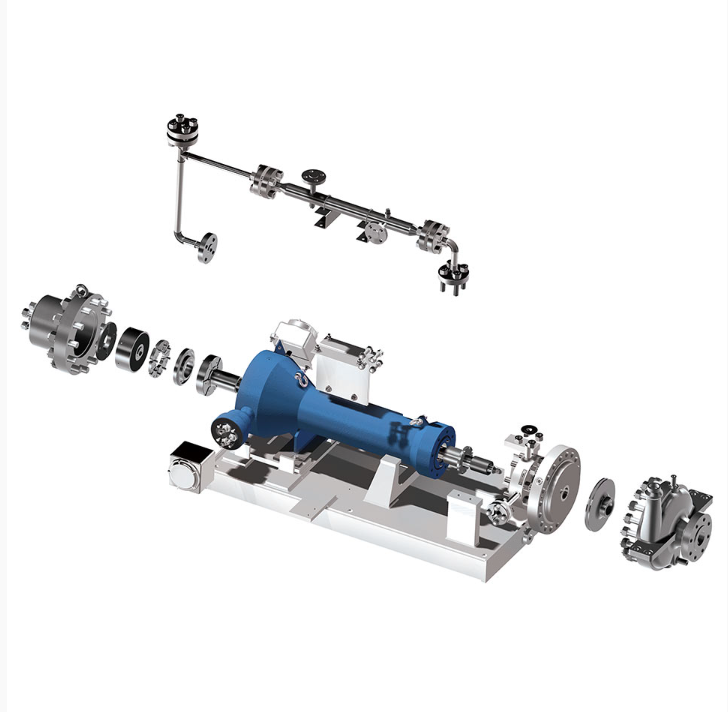
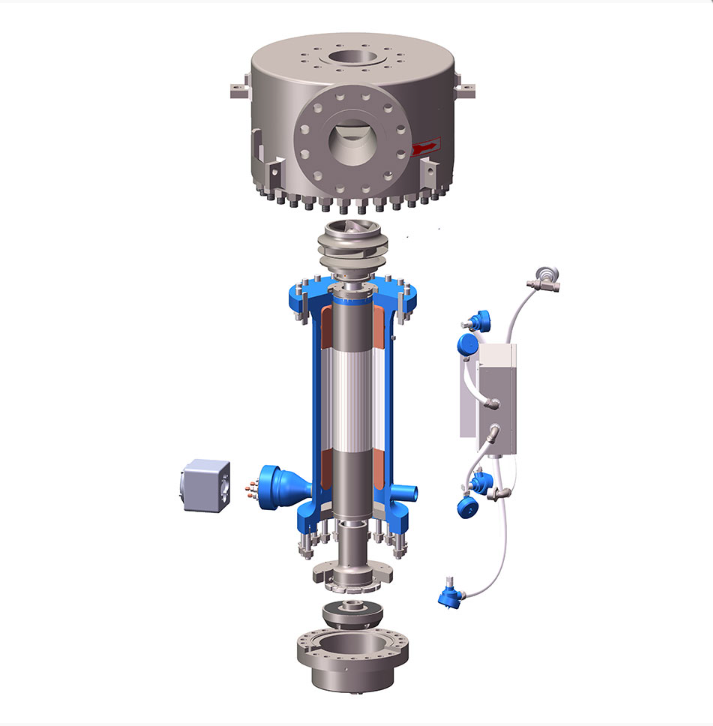
Sectional Arrangement
Hover over the numbers below for details about each feature.

Photo Gallery
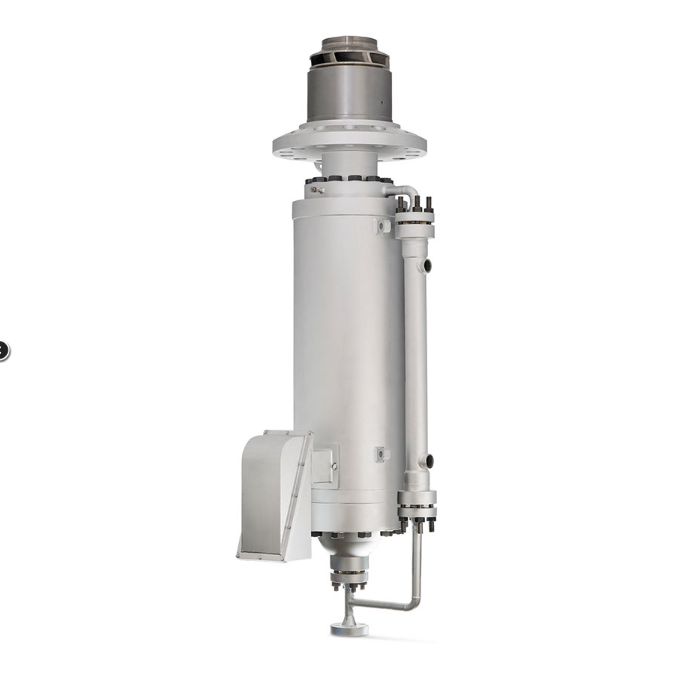
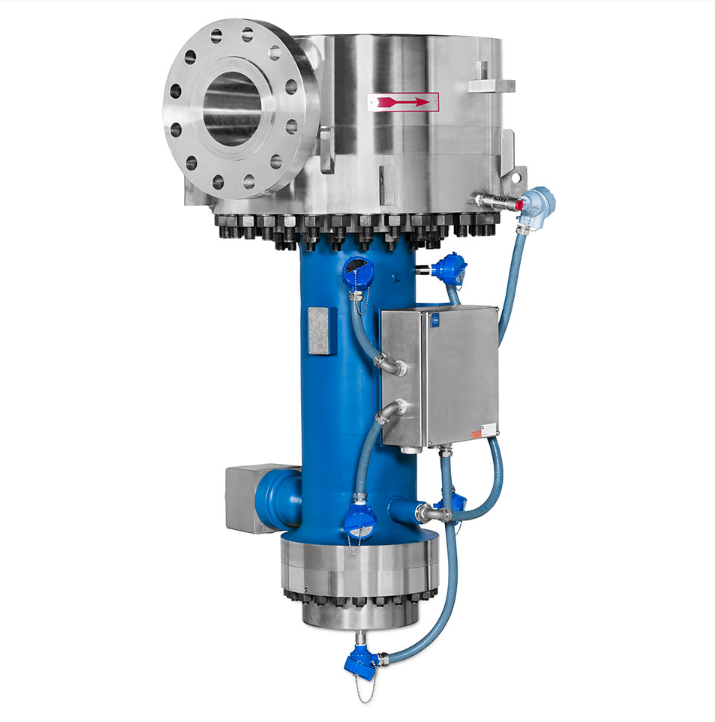
Service & Support
We take great pride in supporting our clients across the globe with timely service. We cover all aspects of support that might be needed during the lifecycle of your Hayward Tyler pump and/or motor.
We provide:
- 24/7/365 Technical Support
- Engineering
- Spare Parts
- Repairs
- Training

Engineering Canned Pumps FAQs
What is a Engineering Canned Pumps?
A Engineering Canned Pumps is a type of centrifugal pump where the pump and motor are integrated into a single, sealed unit. The pump and motor combination are leak-free, making them suitable for pumping hazardous liquids as they will not leak into the atmosphere.
What is a Engineering Canned Pumps used for?
Our Engineering Canned Pumps are ideal for applications that require the highest reliability, safety, and performance, as our pumps are leak-free and low maintenance. They are used in a variety of industries—such as petrochemical, chemical refinement and processing, hydrogen and clean energy, refrigeration, renewables, and nuclear—to move large amounts of fluid.
Why choose a Engineering Canned Pumps over other options?
Engineering Canned Pumps are preferred over mechanically sealed pumps and magnetic drive pumps for a number of reasons. Lack of seals eliminates failures and safety issues that seals can cause. They are are also low maintenance and reduce noise levels. They also weigh less than other pumps, eliminating the need for a foundation, and eliminate problematic emissions inspections and reporting associated with other pump types.
How is the seal eliminated in these pumps?
Due to the laws of physics, higher-pressure fluids want to move to lower-pressure areas. Because traditional pumps must couple to a driver (motor or turbine), the shaft needs to exit the pump pressure boundary (pump case). This means the high-pressure fluid created by the rotating pump wants to leak into the atmosphere along the shaft penetration. This is stopped in traditional pumps by using gland packing or a mechanical seal. CMPs and BCPs use a different approach by using a common shaft for the pump and motor and containing it all in a pressure boundary. This eliminates the pressure differential across the rotating seal and the driving force for the fluid to leak.
What type of material(s) are Engineering Canned Pumps made from?
Engineering Canned Pumps are typically made from type 304 stainless steel for wetted components, with the stator and rotor cans constructed from Hastelloy C276 for its high corrosion resistance and efficiency. Gaskets are usually made of PTFE or spiral-wound stainless steel, depending on temperature and pressure conditions. Bearings are typically made from carbon graphite or silicon carbide, chosen based on application requirements.
Are these pumps environmentally friendly?
Our CMPs and BCPs are inherently safe and environmentally friendly. Because they are sealless, the danger of a fluid leak is eliminated, preventing contamination to the environment.
How long do these pumps lasts?
Our CMPs and BCPs can last up to 30 years, but typically last 10 to 15 years. The lifespan is dependent upon fluid properties and operating conditions.